
In a world saturated with color, there's something undeniably captivating about a black and white
photograph. It's a return to the basics, a focus on light, shadow, and form. By stripping away the
color, a black and white photo forces us to see the world in a different way, to pay attention to
the details that we might otherwise miss.
There's an emotional power to a black and white photograph that is hard to deny. It can be raw, it
can be gritty, it can be incredibly beautiful. It can evoke a sense of nostalgia, of timelessness,
of a world that is both familiar and strange.
A black and white photo is not just a representation of reality; it's an interpretation of it. It's
a way of seeing the world through the eyes of the photographer, of sharing their unique vision with
the world. It's a reminder that even in a world of chaos and color, there is still beauty to be
found in the simple, the quiet, the monochrome.
So the next time you're taking a photo, consider shooting in black and white. You might be surprised
at the results. You might just create a work of art that is both timeless and emotionally resonant.
A Brief History: Monochrome Before Color Was an Option
Black and white photography is not a stylistic choice that photographers invented — it was simply what photography was for its first hundred years. From the earliest daguerreotypes of the 1830s to the slow commercial spread of color film in the mid-twentieth century, every image of the world was made in monochrome by necessity. The great portraits, the war photographs, the street scenes of early industrial cities — all of them rendered in shades of grey.
This historical context matters because it shapes how we read black and white images emotionally. We associate monochrome with the past, with documentation, with a kind of rawness that color can soften. When Henri Cartier-Bresson photographed the streets of Paris in the 1930s and 1940s, or when he captured the chaos of post-partition India, the absence of color was not a limitation — it was the medium's native language. His work endures not despite its monochrome quality but in part because of it: the images feel like evidence, like testimony.
Ansel Adams, working in the American West during roughly the same period, demonstrated something different: that monochrome could be not just documentary but transcendent. His zone system — a method for previewing and controlling the tonal range of a print — treated black and white photography as a form of sculpture in light. His photographs of Yosemite valleys and New Mexican desert skies are not records of places; they are emotional arguments for the grandeur of the natural world.
Learning to See in Black and White
The challenge of monochrome photography is that human vision is natively color-sensitive. When we stand in front of a red door set against a blue wall, our eyes immediately register the contrast between them. Strip the color away, and those two surfaces might render at almost identical grey tones — and the contrast that made the scene interesting simply vanishes.
Pre-visualizing a scene in black and white means training yourself to see tonal contrast rather than color contrast. Before you press the shutter, ask yourself: if the reds and blues and greens were all replaced by shades of grey, would the image still have structure? Would there still be a clear subject, a readable background, a sense of depth?
Bright, overcast days — the kind of flat light that color photographers often avoid — can produce beautiful black and white images precisely because they eliminate harsh shadows and reveal fine texture. Strong directional sunlight, on the other hand, creates the deep shadows and bright highlights that give monochrome its most dramatic quality. Both kinds of light are valid; what matters is understanding which one you're working with.
Contrast and Tonal Range: The Language of Monochrome
Color photographs communicate through hue and saturation. Black and white photographs communicate through contrast and tonal range — the span from the deepest black to the brightest white, and everything in between. Learning to work with this range is the central technical challenge of monochrome photography.
A high-contrast image — deep blacks, bright whites, relatively little in the mid-tones — feels punchy, graphic, and immediate. It's the aesthetic of noir, of crime photography, of architectural photography that emphasizes geometry over texture. A low-contrast image — mostly mid-tones, with soft transitions between light and shadow — feels gentle, nostalgic, almost dreamlike. Portraits in soft, diffused light often benefit from this treatment.
The skill lies in matching the tonal approach to the emotional intent. A tender portrait of an elderly relative deserves the softness of a low-contrast treatment. A photograph of a steel bridge against a stormy sky demands high contrast to match the drama of the subject. Neither approach is inherently superior — they serve different stories.
When Color Distracts, and When It Enriches
Not every image benefits from black and white conversion. Part of developing a photographer's eye is learning to distinguish between scenes where color is doing essential work and scenes where it's creating noise.
Color enriches a scene when it's meaningful: the specific red of a neon sign in a rainy city night, the precise blue of a sky just after sunset, the warm brown of wooden furniture in a room lit by candlelight. In these cases, removing the color would remove essential information. The image would become a different photograph — not necessarily a worse one, but a different one.
Color distracts when it's random or competing: the garish advertisement banner in the background of a street portrait, the mismatched umbrellas in a crowd scene, the green shirt worn by a bystander who has wandered into your carefully composed architectural shot. In cases like these, converting to black and white performs a kind of editorial cleanup, reducing the scene to its essential elements.
A useful test: if the first thing you notice about an image is a color rather than the subject, the color is probably distracting. If the color is part of the subject — if it's contributing to the story — it should stay.
Converting Color to Black and White in Post-Processing
Most photographers today shoot in color and convert to black and white in post-processing, even when they know from the start that the final image will be monochrome. This gives you the maximum amount of information to work with in the conversion.
The simplest conversion — desaturating the color channels equally — is almost never the best option. It tends to produce flat, lifeless results because equal desaturation doesn't account for the different luminance values of different colors. A more nuanced approach uses a channel mixer or HSL adjustment to control how individual colors translate to grey tones.
In Lightroom, the black and white mix panel allows you to specify how bright or dark each color range renders in the final grey image. Making reds darker will deepen the shadows in skin tones, creating a dramatic portrait effect. Making blues lighter will brighten a sky, giving it an open, airy quality. This kind of deliberate tonal control is what separates a thoughtful black and white conversion from a mechanical one.
Printing Black and White for Display
A black and white image that looks stunning on a calibrated screen can be a disappointment when printed on the wrong paper. The choice of print substrate dramatically affects the tonal range and mood of a monochrome image.
Glossy papers produce deep blacks and brilliant highlights, and they render fine detail with great clarity. They're the right choice for high-contrast, graphic black and white images. Matte papers produce a softer, more diffused effect; they tend to perform better in the mid-tones, making them well-suited to portraiture and more gentle, contemplative subjects. Fine art papers — cotton rag, bamboo, and similar archival substrates — add their own texture to the image, and the slight warmth of natural paper fibers can soften the coolness of a pure monochrome print beautifully.
When a black and white print is destined for permanent display — framed and hung on a wall — archival quality matters. Prints made with pigment-based inks on archival paper can last well over a hundred years without significant fading. Dye-based prints, while vivid when new, degrade faster, particularly in bright or humid conditions. The extra investment in archival printing is trivial compared to the cost of printing, framing, and eventually replacing a faded image.
Remove the color, and suddenly the silence in the frame becomes audible.
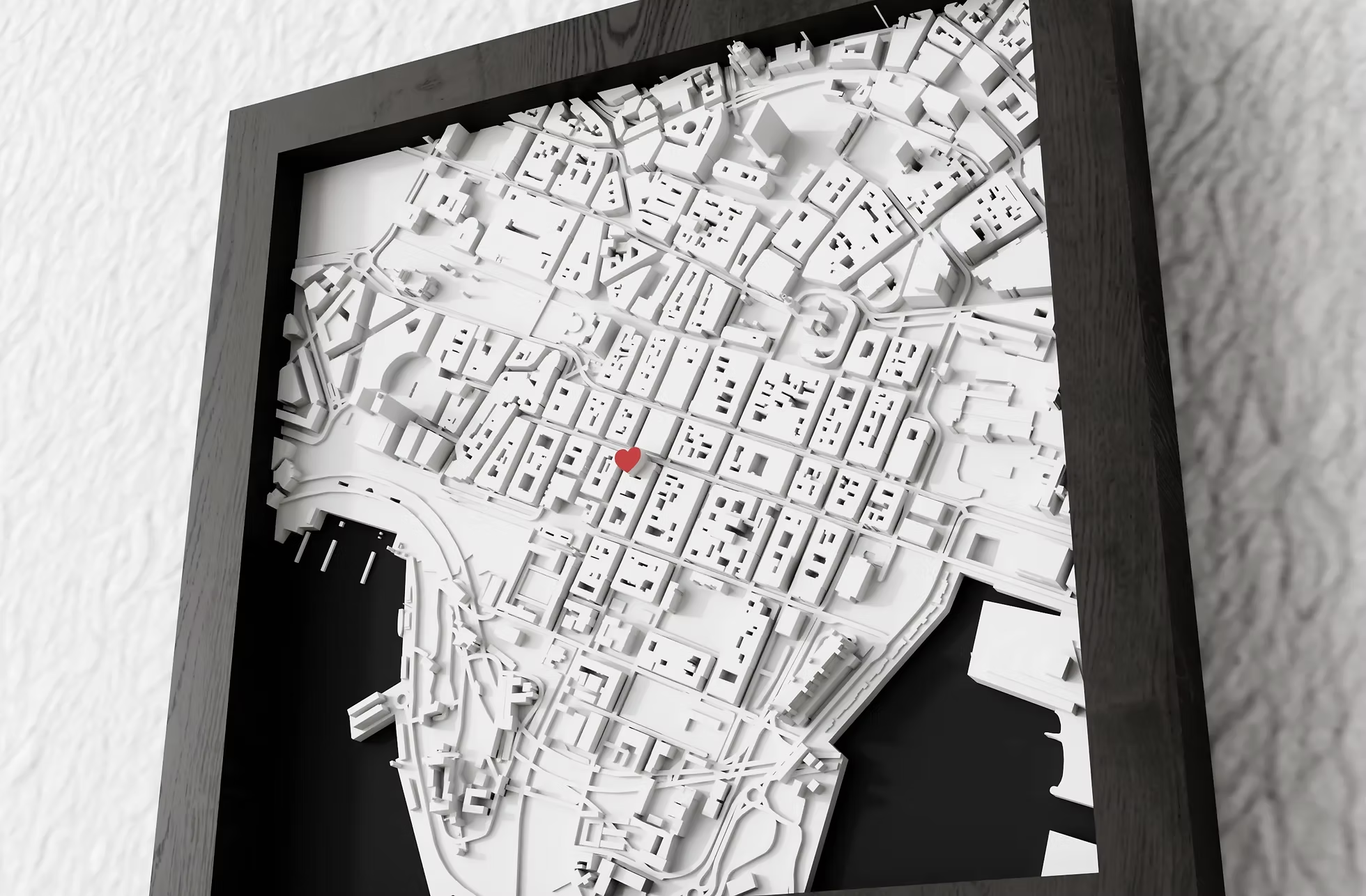
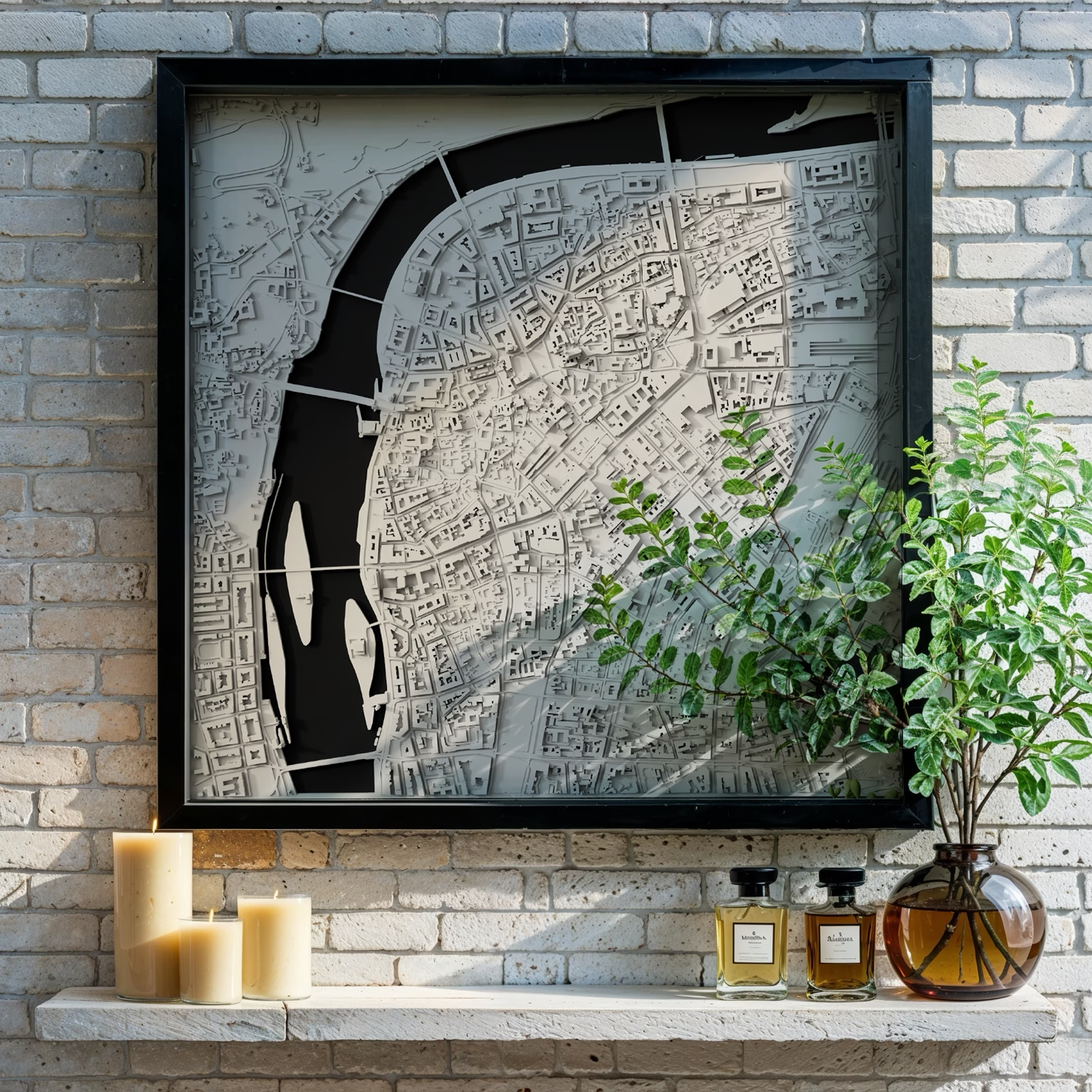
Take this feeling home
Frame the memory before it fades
Choose a handcrafted relief frame to keep this story on your wall.