The city is a symphony of chaos and beauty, a concrete jungle teeming with life. It's a place of
endless inspiration for a photographer, a canvas of ever-changing light and shadow. But how do you
capture the soul of a city? How do you find the beauty in the midst of the urban sprawl?
The key is to look beyond the obvious. Don't just take pictures of the landmarks; look for the
details, the moments that tell a story. The way the light hits a building in the early morning, the
laughter of children playing in a park, the quiet solitude of a deserted street at night. These are
the moments that make a city come alive.
Don't be afraid to get lost. Wander down alleyways, explore hidden courtyards, and talk to the
locals. The best photos are often found in the most unexpected places. And remember, a city is not
just about the buildings; it's about the people. Capture the faces of the city, the stories etched
in their eyes.
So grab your camera, and go explore. The urban jungle is waiting for you.
The Golden Hour: Why Cities Look Better at the Edges of the Day
Every experienced city photographer knows the golden hour rule, but it's worth understanding why it works rather than simply following it as received wisdom. In the hour after sunrise and the hour before sunset, sunlight travels at a low angle through the atmosphere, scattering the shorter blue wavelengths and leaving the longer reds and yellows to reach your lens. The result is that everything in the frame is bathed in warm, directional light that casts long shadows.
In a city, this low-angle light does something remarkable: it picks out the texture of every surface. The pitted stone of an old cathedral wall, the ribbed facade of a glass office tower, the uneven asphalt of a wet street — all of these surfaces come alive in raking light that would be completely invisible under the flat overhead glare of midday. The shadows of pedestrians stretch across the pavement like theatrical spotlights, turning an ordinary intersection into a stage.
The blue hour — the twenty or so minutes just before sunrise and just after sunset — offers a different but equally compelling quality of light. The sky retains a deep cobalt tone that provides a rich backdrop against which the artificial lights of the city glow amber and white. This is the moment when a city's skyline is most graphic, most architectural, most itself.
Geometry and Symmetry: Reading the City as a Visual Grid
Cities are built on geometry. Straight lines, right angles, repeating grids, arched colonnades, radiating boulevards — the built environment is a treasure chest of compositional tools waiting to be used. Training your eye to see these structures as photographic subjects rather than just infrastructure is one of the most transformative shifts a photographer can make.
Look up. Building facades create vertical grids of windows that, photographed from below with a wide angle, converge toward a vanishing point in a way that gives even ordinary office blocks a monumental quality. Look down from above. The overhead view of a roundabout reveals a perfect circle of traffic; a market square from a rooftop becomes an abstract pattern of umbrellas and pedestrian paths.
Symmetry is a powerful tool, but it works best when broken. A perfectly symmetrical building photographed dead-on can feel static. Introduce a single asymmetric element — a bird landing on a cornice, a figure walking through the frame slightly off-center — and the tension between the symmetry and the intrusion creates visual energy that keeps the eye moving.
Reflections: The City Doubled
Rain is a city photographer's best friend, and not because moody weather makes for dramatic skies (though it does). The real gift of rain is puddles. A flooded pavement can become a mirror that contains the entire skyline in miniature, and the resulting image — reality above the waterline, its reflection below — creates a doubled world that feels simultaneously familiar and surreal.
Window glass offers a more controlled form of reflection. A shop window on a busy street might simultaneously reflect the buildings across the road and reveal the interior of the shop behind the glass — a layered image that photographs as a single, complex frame. Look for these moments of accidental collage. They're everywhere once you start looking.
Even polished metal surfaces — the cladding of a modern building, the side of a parked car, a stainless steel cafe tabletop — offer distorted reflections that can abstract a cityscape into something closer to a painting than a photograph.
Street Level vs. Elevated Perspectives
Most people photograph cities from where they happen to be standing: eye level, on a pavement. This is a fine starting point, but it's just one of many available perspectives, and often not the most interesting one.
Getting low — crouching until your lens is nearly at ground level — changes the relationship between the foreground and the background dramatically. A puddle in the foreground becomes enormous, the reflected city filling the lower half of your frame while the real skyline occupies the upper half. A row of cafe chairs photographed from knee height creates a strong foreground element that leads the eye toward the building behind.
Getting high — climbing to a rooftop terrace, a fire escape, an elevated park, the upper story of a car park — gives you the city as a planner might see it, arranged in blocks and grids. Elevated views are particularly effective at communicating a city's density: the way buildings pack together, the narrow channels of streets between them, the hierarchy of tower and row house and back garden.
Capturing Motion: Traffic, Crowds, and the City's Heartbeat
A city is never still, and a photograph that acknowledges this motion captures something a static image cannot. Long exposures — anywhere from one second to several minutes — transform moving traffic into flowing rivers of light. The headlights of cars become warm white streaks; the tail lights become red ribbons that trace the curves of the road with a precision no individual car could achieve.
To achieve this effect, you need a tripod and a shutter speed slow enough for the motion to register. On a busy road at dusk, two to four seconds will typically give you a satisfying trail of light. In low-traffic conditions, you may need to extend the exposure to gather enough movement.
Crowds can be handled differently. A fast shutter speed freezes individual pedestrians, turning a busy street into a snapshot of a specific moment. A slow shutter speed blurs them into ghostly streaks, emphasizing the flow and direction of movement while rendering individuals anonymous — a useful technique when you want to convey the energy of a place without making any single person the subject.
Neighborhoods vs. Landmarks: Where the Real City Lives
Tourist photographs of cities tend to cluster around the same landmarks: the famous bridge, the old cathedral, the distinctive skyline view from the recognized vantage point. These images are famous for a reason — they capture something genuinely iconic. But they rarely tell you what it feels like to actually live in a city.
The residential neighborhoods, the industrial districts being slowly repurposed into studios and cafes, the old market streets where traders have set up for generations — these are the places where a city's character lives most honestly. The signage on a family-run butcher shop, the handwritten menus outside a corner restaurant, the graffiti murals on a railway bridge: these details are as specific to a city as any landmark, and they change faster, which makes photographing them feel more urgent.
The challenge is that these quieter, more personal photographs are often harder to print and display than dramatic skyline shots. They're horizontal slices of ordinary life, and they demand a viewer who will slow down to read them. A quiet image of a backstreet requires a thoughtful frame — one that invites contemplation rather than demanding immediate impact. These are the photographs worth keeping for the long term.
The city's rhythm is a score—you just need to slow down enough to hear the rests.
Take this feeling home
Frame the memory before it fades
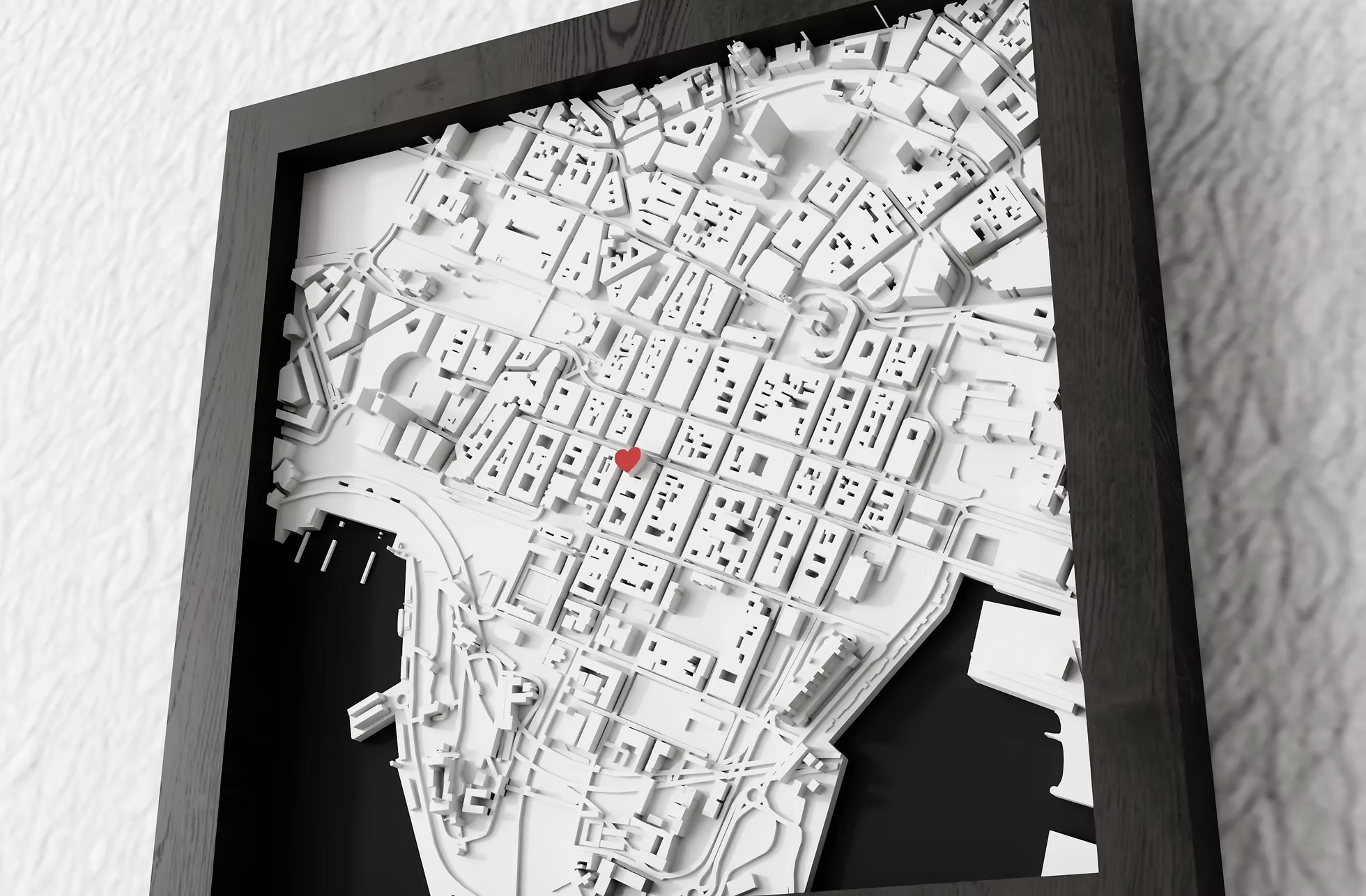
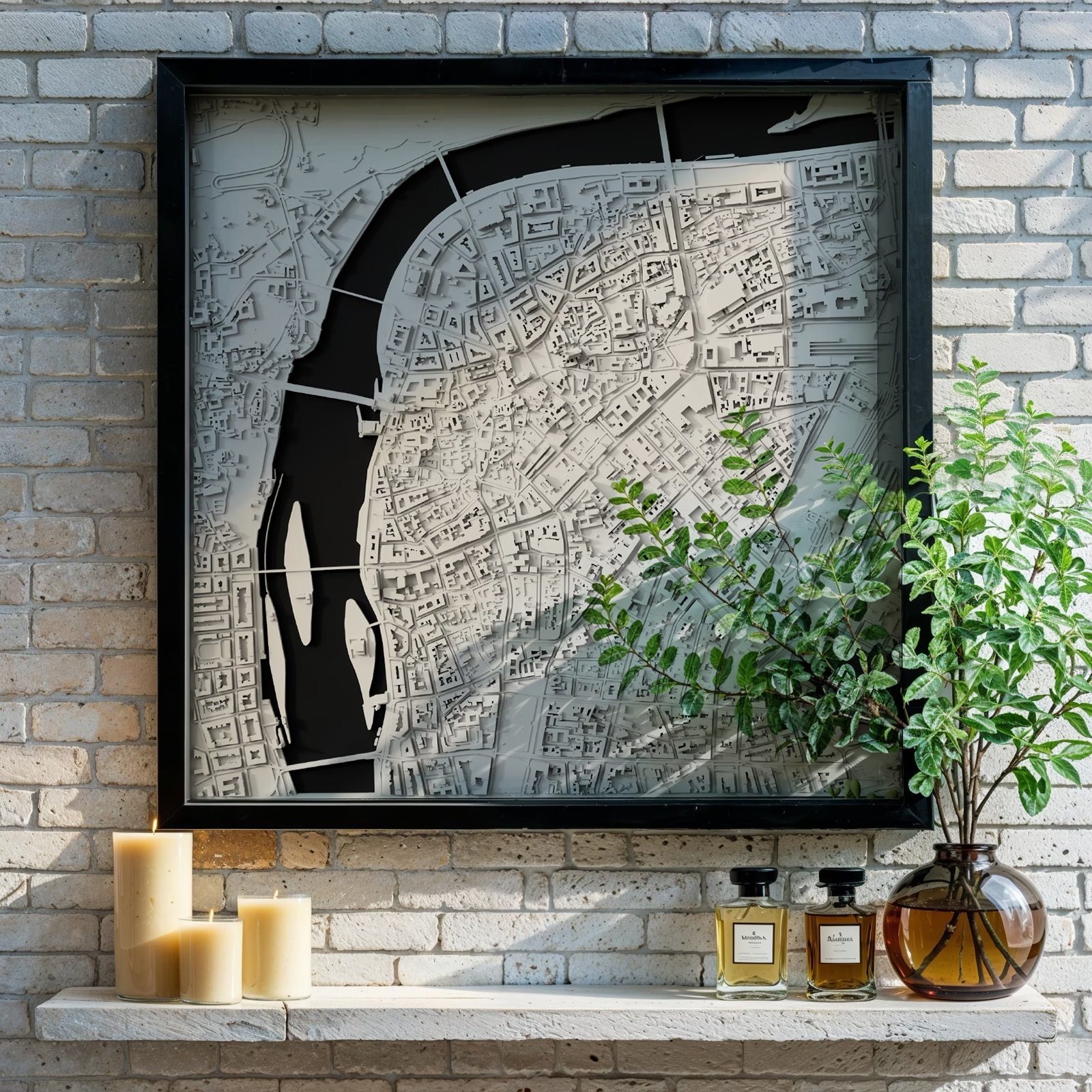
Choose a handcrafted relief frame to keep this story on your wall.