You've captured the perfect cityscape. The light is just right, the composition is flawless, and the
image is breathtaking. Now what? A photo this special deserves more than just a digital existence.
It deserves to be printed, framed, and displayed with pride.
But choosing the right frame is just as important as taking the photo itself. The frame is not just
a border; it's an extension of the image, a way to enhance its beauty and draw the viewer in. A
well-chosen frame can transform a simple photo into a work of art.
So how do you choose the perfect frame for your cityscape? It all depends on the mood and style of
the image. A modern, minimalist frame is perfect for a black and white photo of a skyscraper, while
a rustic, wooden frame would be a better choice for a photo of a charming European street.
At Urban Frames, we offer a wide variety of frames to suit every style and taste. Our team of
experts can help you choose the perfect frame to complement your cityscape and bring your vision to
life.
Frame Material: The Foundation of Your Choice
The material of a frame does more than look good — it communicates something about the image inside it. Wood is the most forgiving and versatile option. A light oak or maple frame reads as warm and approachable, softening the harder edges of a city skyline and making it feel lived-in rather than clinical. Dark walnut adds gravitas and drama, making it a natural companion for twilight cityscapes or moody architectural shots where shadows do the heavy lifting.
Metal frames — aluminium, steel, brushed bronze — bring a contemporary crispness that suits modern cityscapes well. A clean, thin aluminium profile around a high-contrast photo of glass towers creates a cohesive statement: the frame and the subject share the same material language. The risk with metal, though, is that it can feel cold if the image itself is already austere. Pair a metal frame with a city photo that has some warmth — the amber glow of evening lights, the soft haze of a summer morning — and the contrast becomes an asset.
Resin and composite frames sit between wood and metal. They can be cast to mimic the texture of stone or wood while offering durability and a consistent finish. For cityscape photography displayed in spaces with high humidity or temperature fluctuation (a kitchen, a bathroom, an entryway), composite materials hold their shape better than solid wood over the long term.
How Frame Color Shapes the Mood
Color is the conversation between your frame and your image. A white or off-white frame is often recommended as a "neutral" choice, but it's never truly neutral — white frames reflect light back into the room, which can slightly wash out the edges of darker images. They work best with bright, airy city photography: a sunlit piazza, a pastel-colored building row, a cheerful market scene.
Black frames are authoritative. They contain the image, pulling the viewer's attention inward rather than letting the eye wander. For black and white city photography, a black frame feels almost architectural — as though the frame is a continuation of the image's geometry. For color photography, black frames heighten contrast and can make colors feel more saturated.
Gold and warm metallic finishes are having a quiet revival in interior design, and they work beautifully with night cityscapes — images where the city is lit from within by amber streetlights and neon. The frame's warmth rhymes with the warmth in the photograph. Natural wood tones occupy a similar space, bridging the gap between the organic and the urban.
Mat Board: The Breathing Space Your Image Needs
A mat board — the inner border between the glass and the print — is one of the most underappreciated framing decisions you can make. Its primary function is to prevent the print from touching the glass, which can cause condensation damage over time. But its aesthetic function is equally important: the mat gives the image room to breathe.
For cityscape photography, a wide mat (at least 3–4 cm on each side) creates a sense of grandeur. It mimics the way museums display photographs, giving the image the visual importance of a fine-art print. A narrow mat can make the same image feel cramped and rushed.
Choose a mat color that picks up a mid-tone from your image rather than the brightest or darkest point. If your cityscape has a soft grey sky, a warm cream mat will feel more inviting than a stark white one. Double mats — two layers of matting with a thin inner border in a contrasting tone — add a subtle sense of depth and sophistication.
Proportions, Aspect Ratios, and the Architecture of Display
Standard photograph aspect ratios (3:2, 4:3, 16:9) don't always align neatly with standard frame sizes, and this mismatch can force awkward cropping decisions. Before you print, think about where the image will hang and what frame dimensions are available. A panoramic cityscape — the kind that stretches across a wide field of view to capture an entire skyline — often needs a wide frame that manufacturers don't always stock. Custom framing is worth the investment for images like these.
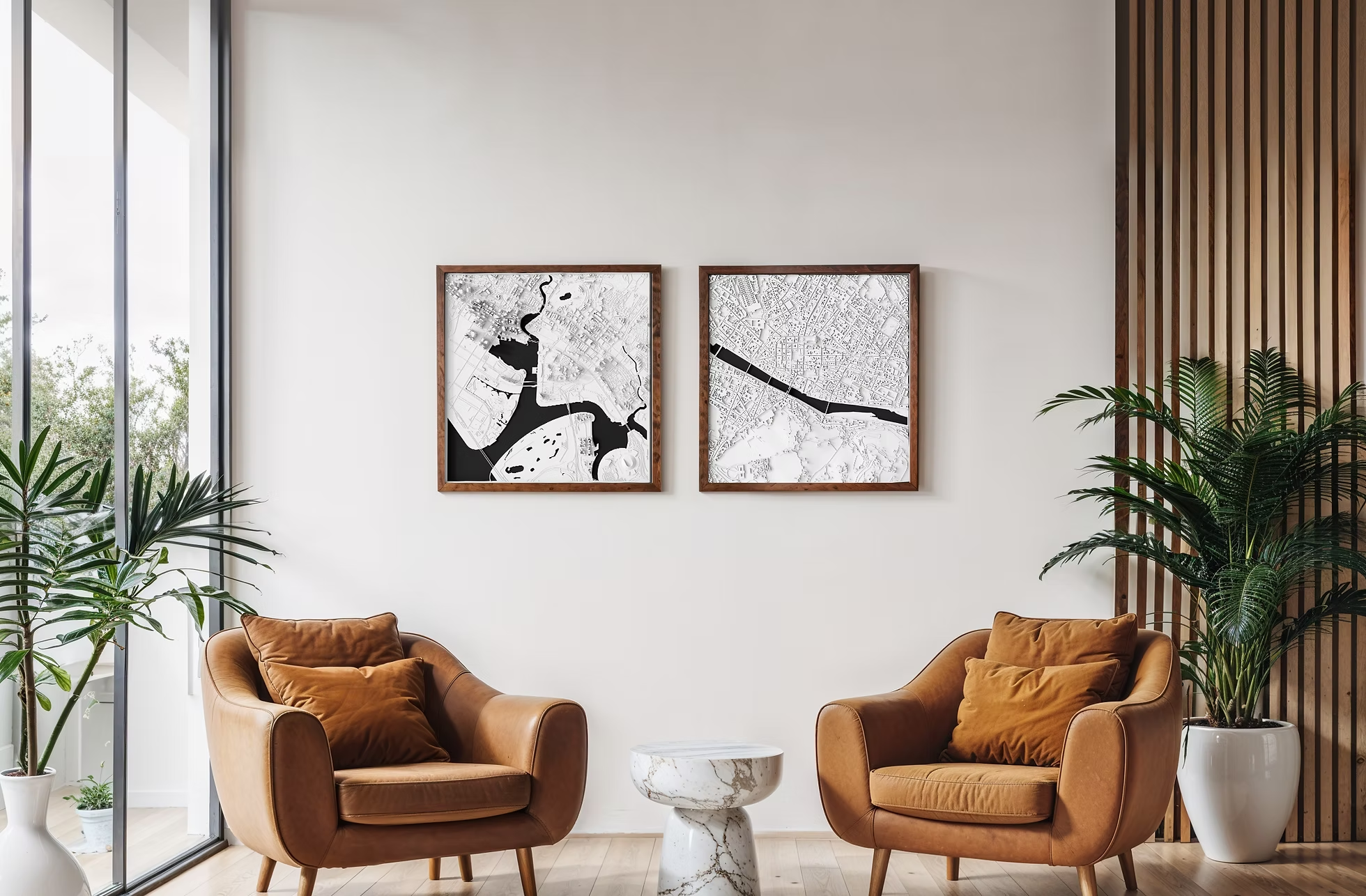
The frame should also be proportional to the wall it occupies. A small frame lost on a large wall looks provisional; an oversized frame on a narrow wall feels aggressive. As a rough guide, the framed image should cover between 50% and 70% of the available wall width. For groupings of multiple images, treat the entire arrangement as a single unit and apply the same proportion rule.
Frame Depth and Three-Dimensional Subjects
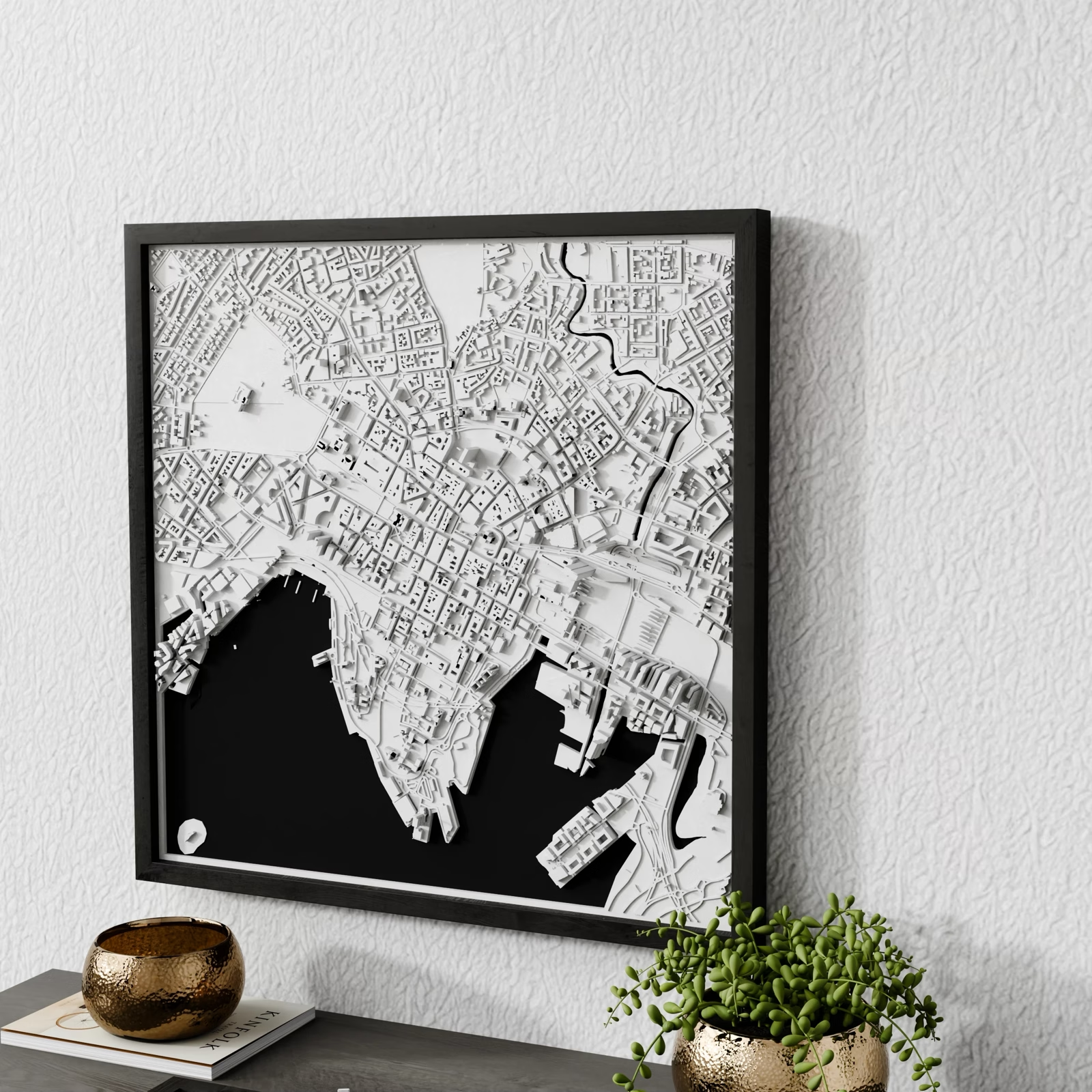
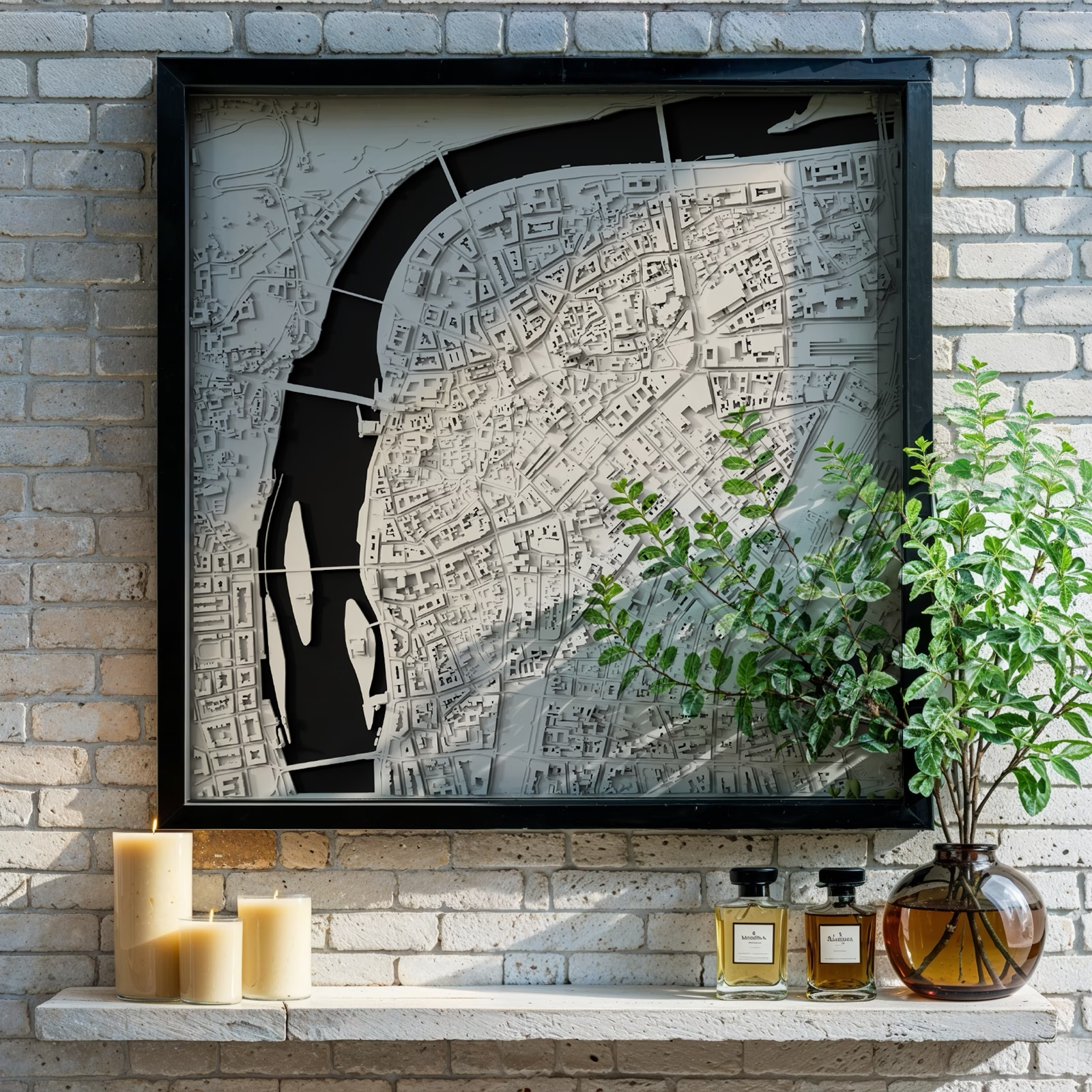
Standard flat frames work perfectly for photography printed on paper or canvas. But when the subject itself has three-dimensional qualities — a textured relief sculpture, a raised topographic map, a shadow-box arrangement of objects — frame depth becomes a critical consideration.
Deep box frames (also called shadow boxes or float frames) provide the interior clearance needed to display objects that project forward from the backing surface. They also create a shadow effect around the edges of the subject, which adds visual separation and gives the piece a more dramatic presence on the wall. If you're displaying a city relief — a sculptural representation of a skyline cast in resin or modeled in careful layers — a deep box frame is not just an aesthetic preference but a practical necessity.
Caring for Your Framed Cityscape
Sunlight is the enemy of printed photography. UV radiation fades pigments over time, and even photographs that appear stable can shift in color after years of exposure to direct light. When choosing where to hang your cityscape, avoid walls that receive direct afternoon sun. If you love a particular spot that gets plenty of natural light, ask your framer about UV-filtering glass or acrylic glazing — it's worth the additional cost for images you intend to keep for decades.
Dust the frame itself regularly with a soft, dry cloth. Avoid spraying glass cleaner directly onto the glass; instead, spray it onto the cloth first. For wooden frames, an occasional application of furniture wax will keep the wood from drying out and cracking. Metal frames simply need a wipe-down.
Where to Hang Cityscape Art
Height matters more than most people realize. The standard museum hanging height — where the center of the artwork sits at eye level, roughly 145–150 cm from the floor — exists because it puts the viewer at the most natural position relative to the image. In a home setting, the furniture beneath the artwork changes the equation slightly: a piece hanging above a sofa should sit 15–20 cm above the sofa's top edge, close enough to feel connected to the furniture rather than floating in empty space.
Corridors and entryways are underrated locations for cityscape art. The narrow format of a hallway naturally draws the eye forward, and a well-chosen cityscape at the end of a corridor creates a sense of depth and destination. It's also the first thing guests see when they enter your home — a city you love, rendered beautifully, makes an immediate and lasting impression.
A frame should feel inevitable—like the city chose its border itself.
Take this feeling home
Frame the memory before it fades
Choose a handcrafted relief frame to keep this story on your wall.